
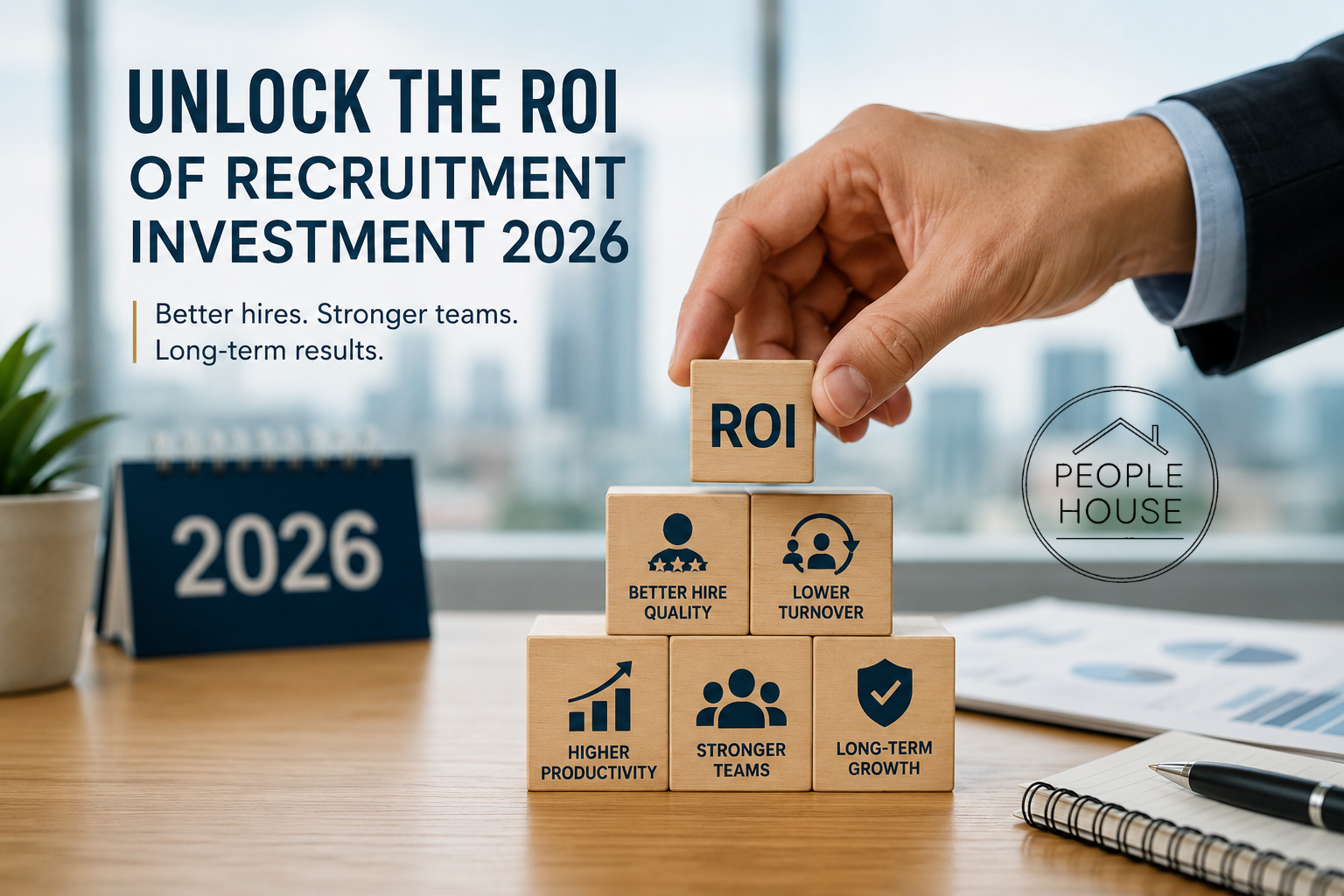
Recruitment in 2026 is no longer just a cost decision :
Recruitment has changed.
In 2026, it’s not really about “how much does it cost to hire someone” anymore.
It’s more about what that hire brings back over time.
Because the reality is simple… the wrong hire costs more than the right one ever will.
And the right hire? They quietly pay you back every single day they stay.
https://www.ons.gov.uk/employmentandlabourmarket
What ROI in recruitment actually means :
When people hear “ROI,” they often think of finance dashboards or spreadsheets.
But in recruitment, ROI shows up in real life, not just reports.
It looks like:
- Teams that stop constantly firefighting
- Lower staff turnover
- Less time spent re-hiring and retraining
- Better service consistency
- Higher morale across the workforce
It’s not always visible immediately.
But it builds slowly, and then suddenly becomes very obvious.
Ultimate: Recruitment Costs of Children Residential Care In The UK
Why recruitment investment matters more :
The job market in 2026 is more competitive, more specialised, and more demanding than before.
Good candidates don’t stay available for long.
And organisations that delay hiring decisions often end up paying more later — either in rushed agency cover or repeated recruitment cycles.
So recruitment is no longer just operational.
It’s strategic.
https://www.cipd.org/uk/knowledge/factsheets/recruitment-factsheet
The hidden return you don’t see on paper :
A strong hire doesn’t just fill a vacancy.
They reduce pressure on everyone else.
They create stability in teams that were previously stretched.
And over time, they prevent the constant drain that comes from repeated turnover.
This is where ROI becomes real — even if it doesn’t show up in a single line of accounting.
Turning recruitment into a long-term investment strategy :
To unlock real ROI in 2026, organisations need to shift how they view hiring.
Not as a reaction to gaps.
But as a planned investment in stability and growth.
That shift changes everything.
It moves recruitment away from urgency-driven decisions and towards something more deliberate… more strategic.
And that’s where real value starts to build.
That means prioritising quality over speed when possible. Working with reliable recruitment partners who understand the sector. Focusing not just on placement, but on retention. And taking time to understand long-term workforce needs instead of only reacting to immediate pressure.
Because recruitment isn’t the end of the process.
It’s the start of everything that follows.
Final thought :
Recruitment investment in 2026 isn’t about spending less.
It’s about spending smarter.
Because the real return doesn’t come from saving on hiring costs.
It comes from building teams that stay, perform, and grow over time.
And that’s the ROI that actually matters.