
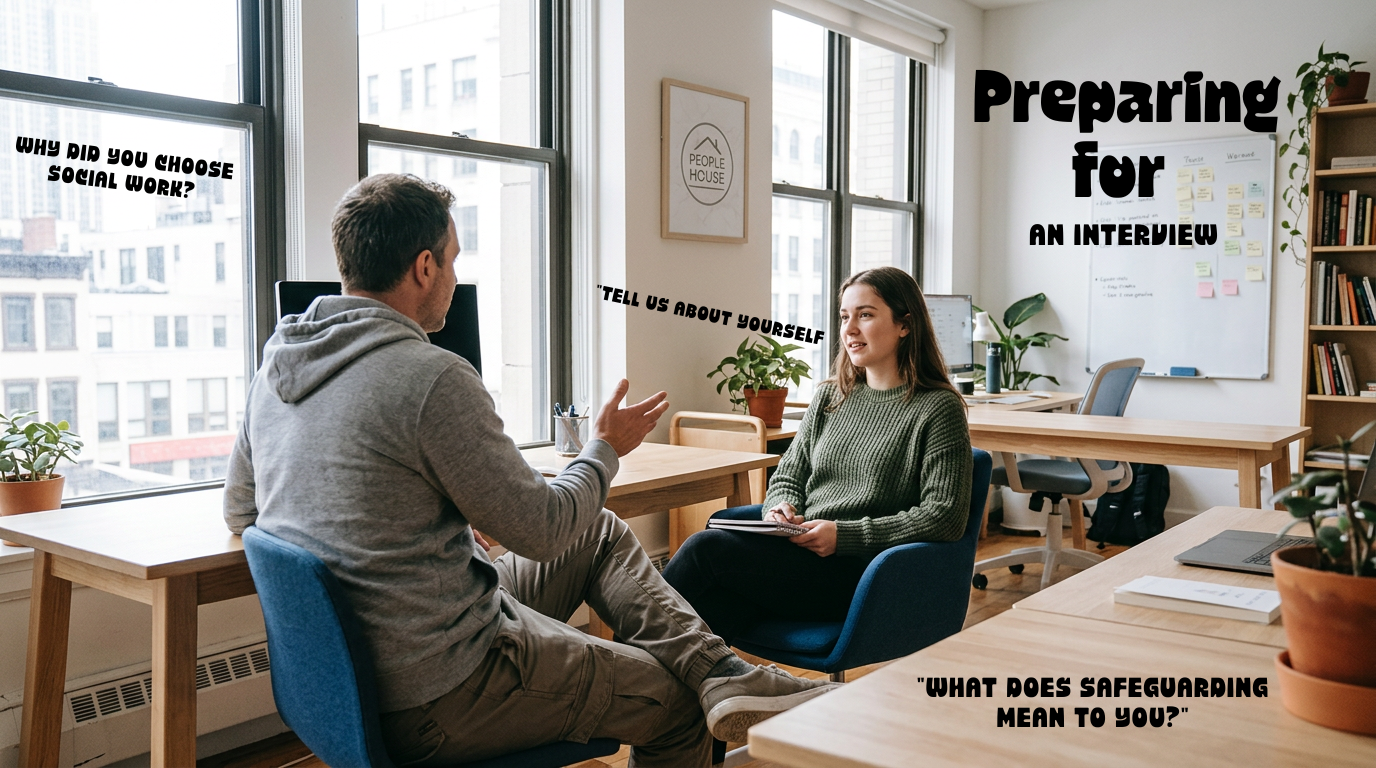
A social worker interview is your opportunity to demonstrate more than your qualifications. Employers want to understand your values, professional judgement, safeguarding knowledge, communication skills, and ability to support vulnerable children, families, and individuals.
Whether you are applying for a children’s social worker role, safeguarding position, family support role, or wider social care opportunity, preparing properly can help you feel more confident and increase your chances of success.
This complete guide explains how to prepare for a social worker interview, the questions you may be asked, how to structure your answers, and what employers look for in successful candidates.
Why Social Worker Interview Preparation Matters :
A social worker interview is not only about your qualifications. Employers want to understand your approach, your values, and how you handle real-life situations.
They want to know that you can:
- Keep children and vulnerable people safe
- Build positive relationships
- Make professional decisions
- Work with families and other professionals
- Handle challenging situations calmly
Good preparation helps you explain your experience clearly and show employers why you are the right person for the role.
👉 https://www.socialworkengland.org.uk/standards/professional-standards
How to Prepare for Your Social Worker Interview :
Research the Organisation :
Before your interview, take time to learn about the organisation.
Look at:
- Their services
- The people they support
- Their values
- The role requirements
For example, if you are applying for a children’s social worker role, understand their approach to:
- Child protection
- Safeguarding
- Care planning
- Supporting families
Showing that you understand the organisation will help you make a stronger impression.
You can also review professional expectations from Social Work England:
👉 https://www.socialworkengland.org.uk/standards/professional-standards
Understand What Employers Look For :
During your interview, employers are looking for evidence that you have the skills needed to support vulnerable people.
They want to see:
Strong Communication Skills
Social workers need to communicate with children, families, colleagues, and other professionals.
Good Decision-Making
You need to show that you can assess situations and make safe choices.
Safeguarding Knowledge
Protecting children and vulnerable people is at the heart of social work.
Teamwork
Social workers often work alongside schools, health professionals, police, and care providers.
Prepare Your Examples Using the STAR Method :
Many interview questions will ask you about your previous experience.
The STAR method helps you create clear answers:
Situation – Explain what happened.
Task – Describe your responsibility.
Action – Explain what you did.
Result – Share the outcome.
For example:
Question: “Tell us about a time you managed a safeguarding concern.”
A strong answer should explain:
- What the concern was
- How you responded
- Who you worked with
- What actions you took
- The outcome
Common Social Worker Interview Questions :
“Tell us about yourself.”
This is usually one of the first questions asked.
Keep your answer focused on:
- Your experience
- Your qualifications
- Your key skills
- Why you chose social work
Avoid sharing too much personal information. Use this opportunity to introduce your professional background.
“Why did you choose social work?”
Employers want to understand your motivation.
Explain:
- Why supporting people matters to you
- What attracted you to social work
- How you want to make a difference
A genuine answer will always be stronger than a rehearsed one.
“What does safeguarding mean to you?”
Safeguarding is one of the most important areas in social work.
A good answer should include:
- Protecting people from harm
- Recognising signs of abuse or neglect
- Reporting concerns correctly
- Working with other professionals
- Putting the child’s or individual’s needs first
For children’s services, candidates should understand guidance such as Department for Education safeguarding guidance.
👉 Working Together to Safeguard Children Guidance
Safeguarding Interview Questions You Should Prepare For :
You may be asked questions such as:
- What would you do if a child disclosed abuse?
- How would you recognise signs of neglect?
- How would you manage a safeguarding concern?
- What would you do if you disagreed with another professional?
- How would you handle an allegation against a colleague?
When answering safeguarding questions, always show that you understand:
- The importance of acting quickly
- Following correct procedures
- Recording information accurately
- Escalating concerns when needed
Common Mistakes to Avoid During Your Interview :
Giving Short Answers :
Avoid answers that only explain what you would do.
Instead, give examples from your experience.
Forgetting the Importance of Safeguarding :
Safeguarding should be included naturally when discussing your work with children and vulnerable people.
Not Asking Questions :
At the end of the interview, asking questions shows that you are interested in the role.
You could ask:
- What does a successful person in this role look like?
- What training opportunities are available?
- What challenges does the team currently face ?
Final Checklist Before Your Social Worker Interview :
Before your interview, make sure you :
- Research the organisation
- Read the job description carefully
- Prepare examples from your experience
- Practise safeguarding answers
- Use the STAR method
- Prepare questions for the interviewer
Final Thoughts :
A successful social worker interview is about showing who you are as a professional.
Employers want someone who understands safeguarding, communicates well, and genuinely cares about improving people’s lives.
With good preparation, clear examples, and confidence in your experience, you can approach your interview feeling ready and prepared.
Good luck with your next opportunity!